Surviving Bedford Falls

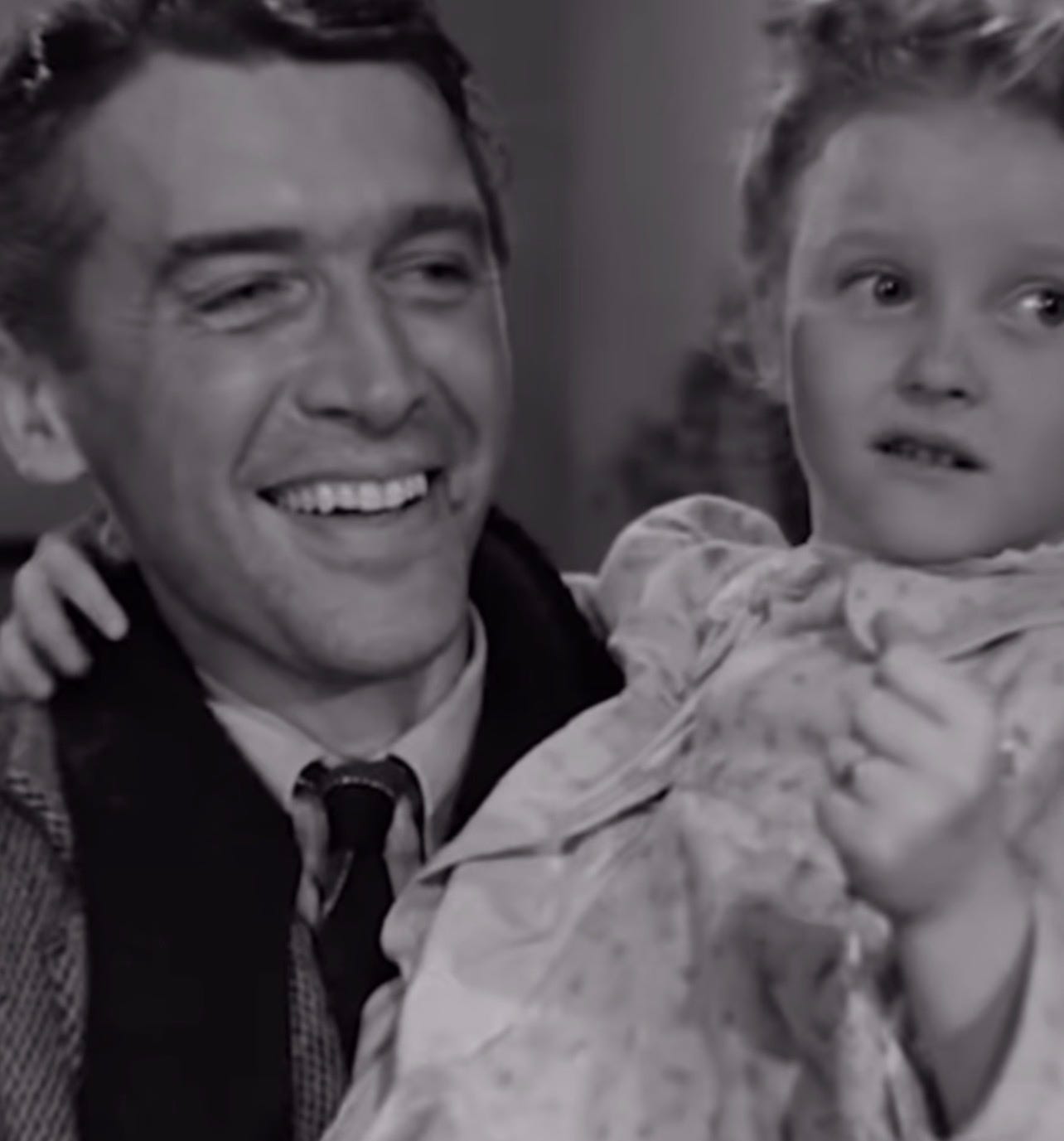
Tomorrow night, Christmas Eve, I’ll surely spend a reasonable amount of my time rewatching Frank Capra’s epic, It’s a Wonderful Life. So much has been written about this movie since its release in 1946 (my God, we’re on the verge of 80 years since it hit theaters 🤯) that you’d be well within your rights to bail here and now. After all, what could some guy on Substack, who mostly writes about The Princess Bride, possibly have to share that you hadn’t already contemplated about this classic film? Well, as it happens, as I’ve done with my favorite childhood flick, I’ve got a few aspects of this special story that warrant a deeper dive. Care to join me in the pool under the gym floor? Read on…
There are three (3) specific moments in this treasured film that don’t get nearly the credit they deserve. And, with your indulgence, I’m going to break them down and share why I think they warrant more of our collective attention. If you’ve not watched it yet this holiday season, or in an even longer time, let me know if you agree once you’ve had the chance to revisit this timeless treasure. Each of these takes place past the movie’s midpoint. In fact, two of them occur in the last ten minutes.
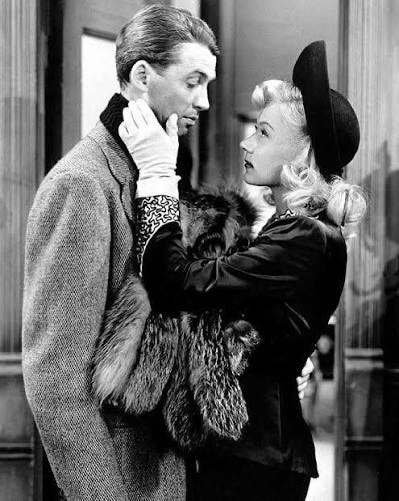
Take care, Violet
Just before the movie’s Third Act ‘turn,’ with the missing $8,000, George is visited by the town’s vixen, Violet Bick. Now, remember, it’s the 1940s, and very few if any of the females in this film are given more than one dimension to occupy. Violet has been painted as a flirt from the very beginning. One might even surmise she ventured into hussy territory, precipitating the urgent effort to skip town and her request for help paying for her bus ticket out. Steady George doesn’t disappoint. He tries to console her, convince her she belongs in Bedford Falls; but when those efforts are rebuffed, he gives her his own money to take that brave next step. He reassures her that what she’s doing takes courage. He props her up, whereas we’re pretty sure most others have played some part in keeping her down. His moral compass is as straight and true as it was forty-odd years earlier, when he sought help from his father to avoid giving Mr. Gower’s accidental poison pills to a schoolmate. Dignity over derision. Piety, not pity. Clarence had to be watching that exchange, and in doing so, he must know beyond a doubt that saving George is the assignment of the century.
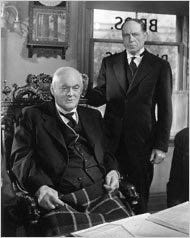
Merry Christmas, Mr. Potter!
As loathsome a villain as in any movie or comic book, Potter paints a picture of cynicism and greed that holds up four generations after he first cursed the big screen. I mean, he tortures the Bailey family for decades! The ‘warped, frustrated old man’ finally thinks his day has come, and in the slimiest of ways. Poor, addled Uncle Billy unwittingly bestowing Potter with the Building & Loan’s paltry earnings sets up the panic which anchors the movie’s final hour. Why, the old coot even makes it a point to gloat when George comes to him on bended knee looking for help! And yet, after George’s life-affirming epiphany, that which the movie’s very title is meant to convey, Potter is among those he wishes a Merry Christmas. Seventy years before a famous First Lady suggested, “When they go low, we go high!” our man George put that concept into practice. In the current climate, when so many are looking to ‘get even’ or ‘own the other side,’ it’s a humbling reminder about what’s really important, isn’t it? This one act of celebration and generosity screams forget the haters, be true to yourself.
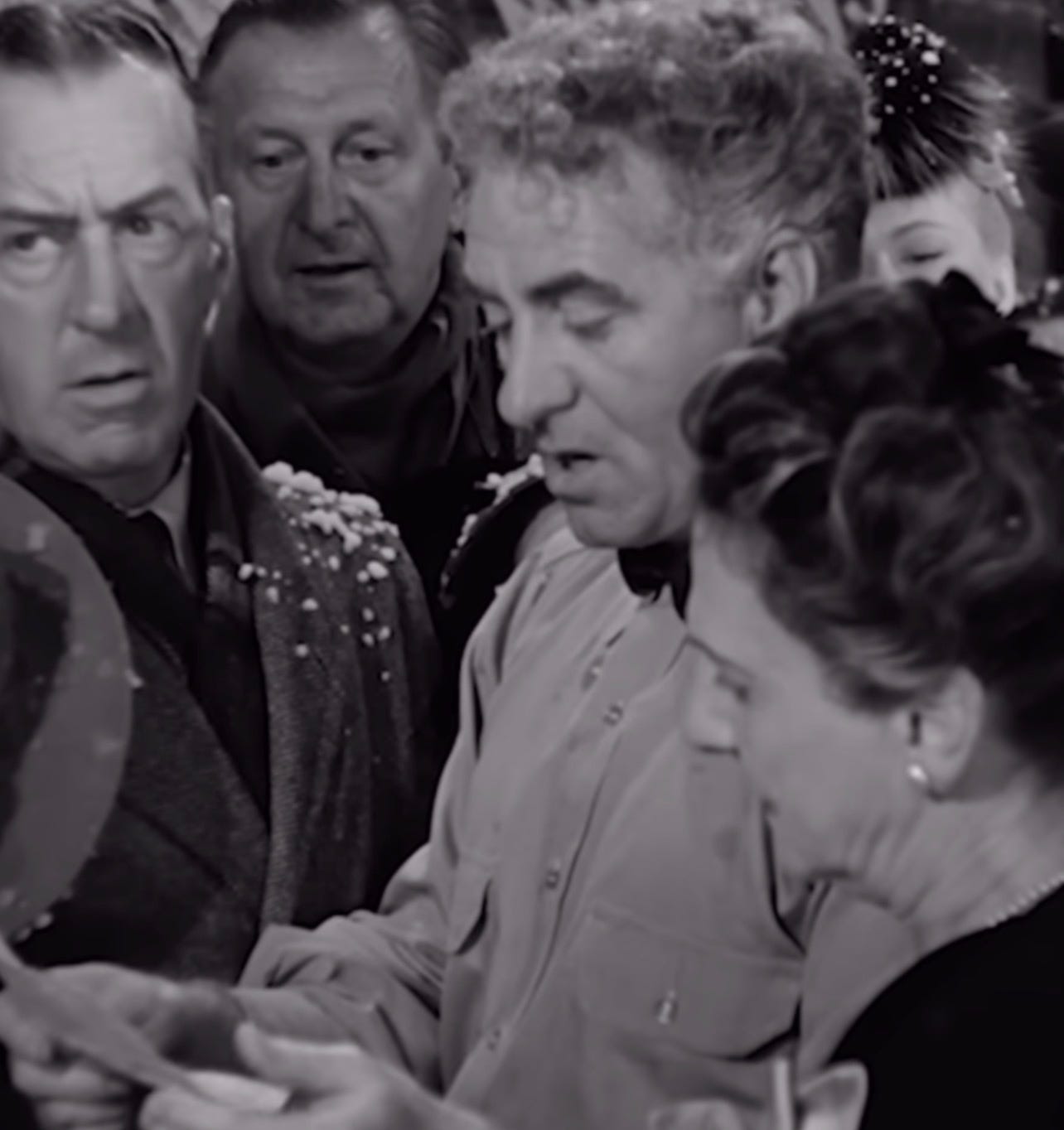
Hee Haw and Merry Christmas
Of course the final minutes of the story are the most moving. But, it’s not little Zuzu announcing what a ringing bell means that gets my waterworks flowing. It’s not Harry toasting his brother George as ‘the richest man in town,’ either. It’s not Martini busting the juke box, Mr. Gower settling his charge accounts, Annie dumping her life savings in the basket, or a half-dozen other kindnesses amidst the cathartic closing. My tears are triggered by someone who isn’t even in the country, much less the room. It’s Sam Wainwright’s telegram from London, as read aloud by Ernie the cab driver. You remember Sam, dontcha? He’s the industrialist who invited George in on the ground floor of the plastics industry, even as he was losing his girl (Mary) to him over the phone. And honestly, it’s not even the wealthy fella’s $25,000 pledge ($400K in today’s dollars!) that does it for me, although clearly that’s the moment we all know George is going to be alright, his debt hurdle comfortably exceeded. Watch closely the next time you take it in. Look for Mary’s glance to George as the telegram’s incredible news is shared, and the realization that washes over George as his face falls and he squeezes Zuzu tightly. That’s the stuff. You might recall that he had told Potter he couldn’t get in touch with Sam. And I’ve long held that somehow it was Mary who found him and explained their plight. That has to account for the look she gives George. She made it happen. She literally saved the day. I can imagine how humbling it must’ve been to make that plea, but love won; shining bigger and brighter than anything in its way. A wonderful life, indeed.
Wishing you and yours the happiest of holidays and a sweet New Year! Thanks for all your support❣️
This movie is so emotionally charged. Mary always loved George. He always had wanderlust. I always felt his sadness. I always felt her worry.
Matt, thank you for a delightful essay on what is without a doubt my favorite holiday film. I loved your insight about the telegram. It’s never occurred to me that Mary had to be the instrument of that intervention, and how humbling it had to be for her to do so. That’s yet another personification of what lengths some of us will go to for the person we love above all others.
Merry Christmas, and Happy Holidays to you and yours.